|
There isn't a Biggest Story for Today, yet.
|
| Thursday, November 19 | | · | When electoral fraud is met by congratulations |
| Tuesday, November 10 | | · | |
| Saturday, October 10 | | · | Barack Obama, The Nobel Peace Prize and the Wrong discussion |
| Monday, September 14 | | · | A Wrecking Ball of Imperialism |
| Tuesday, October 14 | | · | Racism, Obama and the Fall of the American Economy |
| Monday, April 21 | | · | Global Food Crisis: Hunger Plagues Haiti and the World |
| Saturday, March 29 | | · | |
| Wednesday, February 27 | | · | Food price rises will kill millions |
| Thursday, December 20 | | · | Holiday Season Hypocrisy |
| Thursday, November 29 | | · | What Happy Thanksgiving |
Older Articles
|
|  |
|
World Focus: Trump’s Coup in Venezuela: The Full Story
|
|

By Eric Draitser
January 30, 2019 - counterpunch.org
The US-sponsored coup in Venezuela, still ongoing as I write, is the latest chapter in the long and bloody history of US imperialism in Latin America. This basic fact, understood by most across the left of the political spectrum – including even the chattering liberal class which acknowledges this truth only with the passage of time and never in the moment – must undergird any analysis of the situation in Venezuela today. That is to say, the country is being targeted by the Yanqui Empire.
This point is, or at least should be, indisputable irrespective of one’s opinions of Venezuelan President Maduro, the Socialist Party (PSUV), or the progress of the Bolivarian Revolution. Imperialism, and its neocolonial manifestation in the 21st Century, is there to pick clean the bones of the Bolivarian dream and return Venezuela to the role of subservient asset, an oil-soaked proxy state ruled by a right-wing satrap eager to please the colonial lords of capital.
|
|
World Focus: Why marijuana became illegal
|
|
By Noel Kalicharan
April 22, 2017
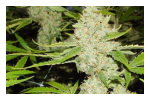
The "war on marijuana" has been waged for close to one hundred years, cost trillions of dollars and hundreds of thousands of lives, made criminals out of millions of otherwise law-abiding persons, denied life-saving medicine to millions more, without making the smallest dent in its availability.
Three men orchestrated the war: William Randolph Hearst (newspaper magnate), Andrew Mellon (former Treasury Secretary and one of America’s wealthiest bankers and industrialists) and Harry Anslinger (appointed by his uncle-in-law Mellon to be the first Commissioner of the Treasury Department’s newly reorganized Federal Bureau of Narcotics and Dangerous Drugs, forerunner to the Drug Enforcement Agency). Throw in the DuPont Chemical Company, whose main financier was Mellon Bank, and you have the prime players.
|
|
World Focus: America Prosecutes the World
|
|
By Margaret Kimberley
June 20, 2015 - blackagendareport.com
“Nearly every policy enacted by our government is meant to diminish the rights of individuals and other nations and to increase the power of the American state and corporations.“
On May 27, 2015, the Swiss government arrested seven men in Geneva at the behest of the United States. The individuals were officials from the Fédération Internationale de Football Association (FIFA) the body which governs international soccer.
The United States Justice Department charged these FIFA officials with corruption in awarding soccer World Cup sites. The existence of bribery in awarding international sporting events such as the World Cup and Olympic games has been an open secret for many years. It was the American claim of jurisdiction to carry out these prosecutions which caught the world by surprise.
|
|
World Focus: Ebola, Human Rights and Poverty – Making the Links
|
|
By Alicia Ely Yamin
October 28, 2014 - opendemocracy.net
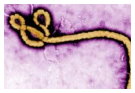
The catastrophic Ebola crisis unfolding in West Africa offers many lessons, not least for global anti-poverty efforts. These will culminate in a set of targets, to be agreed by the United Nations in 2015, known as the Sustainable Development Goals (SDGs).
First of all, the crisis should lead to a re-think of the triumphalism that has marked some of the global health debate in recent years, with some projecting a “grand convergence within a generation” between North and South, rich and poor countries, based upon the “end of preventable mortality, including from infectious diseases”.
"It is not a coincidence that, in addition to the legacy of colonial exploitation, and pillaging by their own corrupt and unaccountable governments in recent history, Liberia and Sierra Leone are two countries that have been ravaged by brutal civil wars." Second, neither universal health insurance, without real access to public health as well as effective care, nor cash transfers, without connections to functioning systems, would have thwarted Ebola or the social devastation it is wreaking. Yet both are highly touted solutions to global poverty, and likely to be part of the SDG agenda.
|
|
World Focus: Freedom Rider: The Real Ebola Conspiracy
|
|
By Margaret Kimberley
October 14, 2014 - blackagendareport.com
“African countries are poor because they have been systematically looted by Europe, the United States and the rest of the capitalist world for centuries.”
The ability to engage in critical thinking seems to be lost on the vast majority of Americans.
When Americans don’t like a president they claim that his mother traveled all the way from Hawaii to Kenya to give birth to him. Others swear that parents in Newtown, Connecticut went along with a government plot and pretended their children were shot to death in school when they are in fact still alive somewhere.
Ebola, now officially known as Ebola virus disease (EVD), has claimed thousands of lives in sporadic outbreaks ever since it was identified in the Congo in 1976. Scientists are unsure of its exact origins but hypothesize that its host is a forest dwelling fruit bat. According to this theory, its bodily fluids can be spread to other animals and then to humans through physical contact.
|
|
World Focus: Washington’s Grand Ambition Explains Its Pressures on Russia
|
|
By Michael S. Rozeff
August 20, 2014 - lewrockwell.com
After the Soviet Union ended, Washington switched without a second’s delay from an anti-USSR policy to an anti-Russia policy. This included extending NATO to Russia’s borders in violation of earlier false signals and assurances that it would not, and it included Washington’s unilateral withdrawal from the 1972 Anti-Ballistic Missile Treaty. It included U.S. support of anti-Russian leaders in Georgia and Ukraine. It has included a wide range of other steps, such as trying to diminish Russia’s role as a European energy supplier. Anti-Russian policies extend to supporting NGOs inside Russia and even to supporting a minor event like the Pussy Riot stunt. Although U.S.-Russian cooperation has surfaced in some respects, for tactical reasons, there is also no doubt that Washington’s main thrust has been one of pressuring Russia and antagonizing her.
The sanctions imposed on Russia this year by Obama are only the latest steps. These go further. They attempt to isolate Russia and to pressure her on a matter of strategic importance, namely, Crimea. Ukraine is an excuse for Washington’s sanctions agenda as well as a continuation of its earlier anti-Russian policies. By linking the sanctions to Crimean withdrawal, as Obama has done, Washington intends to maintain sanctions as a tool of pressuring Russia indefinitely, knowing that Russia will not withdraw from that strategic and historically connected region under pressure from Washington. Washington has created a permanent bone of contention with Russia over Crimea, and the sanctions will remain as a permanent source of friction. Russia will adapt to them, however, shifting its policies and attention in other parts of the world.
|
|
World Focus: Hillary and Other Assorted Barbarians at Russia’s Gate
|
|
By Glen Ford
March 07, 2014 - blackagendareport.com
“Americans sound like southern white fascists, with their reflexive assumptions of supremacy, global privilege, and ordained national mission.”
Hillary Clinton is a walking profanity – and, thereby, a prime candidate to be the next president of the United States. The fiend who played Julius Caesar when U.S.-employed jihadists butchered Libya’s Muammar Gaddafi (“We came, we saw, he died”) now likens Russia’s response to the U.S.-backed fascist putsch in the Ukraine to Hitler’s quest for a Greater Germany. It is like spitting on the graves of the 25 million Russians and other Soviet nationalities slaughtered in Hitler’s racist jihad – the people who actually defeated the Nazis while the U.S. and Britain loitered off Europe’s shores. At war’s end, the United States imported thousands of Nazis to construct the nuclear/chemical/biological military juggernaut that would usher in an “American Century” – while confiscating Paul Robeson and W.E.B. Dubois’ passports.
Thanks to the Americans, West German denazification never happened but, by the mid-Seventies, Washington had implanted fascist military regimes throughout Latin America – one of which exterminated 200,000 Guatemalan Mayas.
|
|
World Focus: America's Staggering Hypocrisy
|
|
By Robert Parry
March 4, 2014 - consortiumnews.com
Since World War II – and extending well into the Twenty-first Century – the United States has invaded or otherwise intervened in so many countries that it would be challenging to compile a complete list. Just last decade, there were full-scale U.S. invasions of Afghanistan and Iraq, plus American bombing operations from Pakistan to Yemen to Libya.
So, what is one to make of Secretary of State John Kerry's pronouncement that Russia's military intervention in the Crimea section of Ukraine – at the behest of the country's deposed president – is a violation of international law that the United States would never countenance?
Kerry decried the Russian intervention as “a Nineteenth Century act in the Twenty-first Century.” However, if memory serves, Sen. Kerry in 2002 voted along with most other members of the U.S. Congress to authorize President George W. Bush's invasion of Iraq in 2003, which was also part of the Twenty-first Century. And, Kerry is a member of the Obama administration, which like its Bush predecessor, has been sending drones into the national territory of other nations to blow up various “enemy combatants.”
|
|
World Focus: Monsanto, the TPP and Global Food Dominance
|
|
By Ellen Brown
November 26, 2013 - ellenbrown.com
"Control oil and you control nations," said US Secretary of State Henry Kissinger in the 1970s. "Control food and you control the people."
Global food control has nearly been achieved, by reducing seed diversity with GMO (genetically modified) seeds that are distributed by only a few transnational corporations. But this agenda has been implemented at grave cost to our health; and if the Trans-Pacific Partnership (TPP) passes, control over not just our food but our health, our environment and our financial system will be in the hands of transnational corporations.
Profits Before Populations
Genetic engineering has made proprietary control possible over the seeds on which the world's food supply depends. According to an Acres USA interview of plant pathologist Don Huber, Professor Emeritus at Purdue University, two modified traits account for practically all of the genetically modified crops grown in the world today. One involves insect resistance. The other, more disturbing modification involves insensitivity to glyphosate-based herbicides (plant-killing chemicals). Often known as Roundup after the best-selling Monsanto product of that name, glyphosate poisons everything in its path except plants genetically modified to resist it.
|
|
World Focus: If Charles Taylor is a War Criminal, Then So are Obama, Bush and Clinton
|
|
“Clinton, Bush and Obama have instigated, encouraged and collaborated in the worst genocide since World War Two.”
By Glen Ford
October 06, 2013 - blackagendareport.com
“Whereas Liberian president Charles Taylor was accused of encouraging the slaughter of possibly 50,000 people in Sierra Leone, Obama, George W. Bush and Bill Clinton have armed, financed and protected the killers of six million people – 120 times as many fatalities – in the eastern Congo.”
Last year, former Liberian president Charles Taylor became the first former head of state ever to be convicted by an international tribunal. Taylor, whose 60-year prison sentence was upheld, last week, was found guilty of war crimes – not in his own country, but in neighboring Sierra Leone, where a civil war had raged from 1991 to 2002. The Liberian president wasn’t accused of personally committing mass murder in Sierra Leone, or even of having ordered that these crimes be committed. Instead, the prosecution argued that he had “instigated” others to commit the crimes in order to profit from the sale of what became known as “blood diamonds.” The court reasoned that Taylor must have known about the horrendous crimes that were being perpetrated by his friends among the rebels in the neighboring country, and was, therefore, as guilty as they were.
|
|
World Focus: What North Koreans Think
|
|
"We learned the lesson in Yugoslavia, Iraq, Afghanistan: be strong."
By Stansfield Smith
April 11, 2013 - counterpunch.org
I recently returned from a late March trip to North Korea [Democratic Peoples Republic of Korea, DPRK], along with 45 others, through Koryo Tours. On that tour I had the opportunity to discuss with the Korean tour guides their views on the current situation. I only recall the DPRK view mentioned here once in the corporate media, when Dennis Rodman returned with a message from new President Kim Jong. The message was “I don't want war, call me.” Nobel Peace Prize winning President Obama refused to accept it, evidently preferring an escalating threat of a regional nuclear war to talking. I asked my Korean tours guides to be interviewed so I could present their views to US people.
Has the DPRK made proposals for peaceful national reunification?
Yes, now we have options: the historic option of a federal republic, and the recent option. In our history we proposed three principles for reunification: that the North and South unite the country independently of foreign forces, that we reunify peacefully, and that we work together over the years to create the unity of the whole nation.
|
|
World Focus: Rupert Murdoch and Media Corruption
|
|
By Margaret Kimberley
July 14, 2011 - blackagendareport.com
“Murdoch felt he had nothing to fear from politicians and that he was probably right to be so unconcerned.”
If it can be said that there is one lord of world wide corporate media, that person is Rupert Murdoch. Murdoch’s News Corporation reigns supreme in television and print media in his native Australia, the United States and the United Kingdom.
Americans are most familiar with News Corporation ownership of the Fox news cable channel, the New York Post, Dow Jones Inc., the Wall Street Journal, and Twentieth Century Fox film studio among others. The Murdoch organization is not just big, but has a distinct political point of view. Despite the claim of being “fair and balanced” Fox news and other Murdoch outlets blatantly promote and protect conservative interests and politics.
|
|
World Focus: Egypt, the American Way
|
|
Model of the Status Quo?
By Gregory Elich
March 23, 2011 - counterpunch.org
In Egypt, a people's uprising has succeeded in removing Hosni Mubarak from power. The main battle, however, lies ahead. Will there be a substantive transformation of Egyptian society, or will the economic and political system remain essentially unchanged, with only a new face occupying the presidential office? There are powerful forces that are determined to steer events in the latter direction.
While many in the Egyptian middle class, fed up with the corrupt rule of Mubarak, may be content to see the establishment of formal electoral democracy, the poor of Egypt hope for genuine economic and political change. Their grievances are many.
|
|
World Focus: The Fall of the West's Little Dictator
|
|
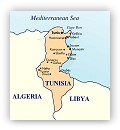
"A Watershed Moment in the History of the Arab World"
By Esam Al-Amin
January 19, 2011 - counterpunch.org
When people choose life (with freedom)
Destiny will respond and take action
Darkness will surely fade away
And the chains will certainly be broken
—Tunisian poet Abul Qasim Al-Shabbi (1909-1934)
On New Year's Eve 1977, former President Jimmy Carter was toasting Shah Reza Pahlavi in Tehran, calling the Western-backed monarchy "an island of stability" in the Middle East. But for the next 13 months, Iran was anything but stable. The Iranian people were daily protesting the brutality of their dictator, holding mass demonstrations from one end of the country to the other.
|
|
World Focus: Liu’s Nobel Prize for Capitalism
|
|

By Stephen Gowans
October 15, 2010 - gowans.wordpress.com
Liu Xiaobo, the Chinese dissident who was recently awarded the Nobel Peace Prize, has been hailed as a champion of human rights and democracy. His jailing by Chinese authorities for inciting subversion of the state is widely regarded as an unjust stifling of advocacy rights by a Chinese state intolerant of dissent and hostile to ”universal values”. But what Western accounts have failed to mention is that Charter 08, the manifesto Liu had a hand in writing and whose signing led to his arrest, is more than a demand for political and civil liberties. It is a blueprint for making over China into a replica of US society and eliminating the last vestiges of the country’s socialism. If Liu had his druthers, China would: become a free market, free enterprise paradise; welcome domination by foreign banks; hold taxes to a minimum; and allow the Chinese version of the Democrats and Republicans to keep the country safe for corporations, bankers and wealthy investors. Liu’s problem with the Communist Party isn’t that it has travelled the capitalist road, but that it hasn’t traveled it far enough, and has failed to put in place a politically pluralist republican system to facilitate the smooth and efficient operation of an unrestrained capitalist economy.
|
| |
|
There is a problem right now with this block.
|
|