|
There isn't a Biggest Story for Today, yet.
|
| Sunday, January 17 | | · | Reparations, not handouts, for Haiti |
| Friday, January 15 | | · | Haitian Earthquake Disaster: Made in the USA |
| Thursday, January 14 | | · | Catastrophe in Haiti |
| · | Our Role in Haiti's Plight |
| Wednesday, May 27 | | · | Nothing Can Be Improvised in Haiti, Fidel Castro |
| Sunday, April 26 | | · | What is Canada Doing in Haiti? |
| Friday, April 24 | | · | Honouring a Legacy of Imperialism, Racism and Oppression |
| Friday, February 27 | | · | US Discriminatory Immigration Policies Toward Haitians |
| Friday, November 07 | | · | Targeting Aristide in Exile |
| Friday, October 31 | | · | Haiti: Racism and Poverty |
Older Articles
|
|  |
|
Caribbean: How the International Community Failed Haiti
|
|
Hundreds of Thousands Homeless in Haiti Three Years After the Earthquake Despite Billions in Aid Funneled to NGOs, Contractors and Internationals
By Bill Quigley and Amber Ramanauskas
January 17, 2013 - counterpunch.org
Despite billions in aid which were supposed to go to the Haitian people, hundreds of thousands are still homeless, living in shanty tent camps as the effects from the earthquake of January 12, 2010 remain.
The earthquake devastated Haiti in January 2010 killing, according to Oxfam International, 250,000 people and injuring another 300,000. 360,000 Haitians are still displaced and living hand to mouth in 496 tent camps across the country according to the International Organization of Migration. Most eat only one meal a day.
|
|
Caribbean: Poor Little Haiti to be Fleeced of its Riches
|
|
By Dady Chery
May 09, 2012 - blackagendareport.com
“This mining plan will permanently strip the country of much of its mineral, cultural, and ecological wealth.”
Show me a corporate boss who calls Haiti the “poorest country in the western hemisphere,” and I’ll show you a con artist preparing to fleece Haiti. Likewise, show me a western technocrat who bemoans Haiti’s “dramatic deforestation due to charcoal production” and I’ll show a bio-pirate or vandal preparing to wreck Haiti’s remaining cloud-forest and mangrove-forest ecosystems.
It turns out that the real plan for Haiti’s northeastern region — especially the Caracol Bay area — is one that was hatched by Canadian mining corporations, with the U.S and South Korean sweatshop zone being a side project and distraction. If this mining plan is given a green light while Haiti is under foreign occupation, it will permanently strip the country of much of its mineral, cultural, and ecological wealth.
|
|
Caribbean: Monsanto in Haiti
|
|
By Beverly Bell
July 15, 2011 - pambazuka.org
Last week, thousands of farmers and supporters of Haitian peasant agriculture marched for hours under the hot Caribbean sun to call for more government support for locally grown seeds and agriculture.
The demonstration was organized by the Peasant Movement of Papay and other farmer associations, human rights and women’s groups, and the Haitian Platform for Alternative Development (PAPDA), the Haitian online agency AlterPresse reported from the march. The official theme of the peaceful demonstration was “Land Grabbing is Endangering Agricultural Sovereignty.”
Singing slogans like “Long Live Haitian Agriculture!” and “Long live local seeds!” the crowd – wearing straw hats and red T-shirts – wound its way on foot, donkeys, and bikes through this dusty provincial capital. The demonstration ended at a square named for farmer Charlemagne Péralte, who lead the “Caco” peasant revolt against the U.S. army occupation from 1916 until 1919, when U.S. Marines assassinated him.
|
|
Caribbean: Haiti's Election Debacle
|
|
By Joseph Crupi
December 09, 2010 - coha.org
Expectations heading into Haiti's elections on November 28 were modest at best. The country's notoriously opaque Conseil Électoral Provisoire (CEP) once again excluded the country's most influential political party, Fanmi Lavalas, from participating in elections, as well as a number of other parties and individual candidates. Procedurally, the devastation from January's earthquake and the ongoing cholera epidemic seriously complicated efforts to register voters and establish an adequate number of polling stations. While many in Haiti and abroad had held out hope that it would still be possible for the election to proceed in an orderly and peaceful manner, such expectations were unfortunately dashed by widespread reports of voter confusion, violence, and fraud.
Reactions to the elections varied: some groups claimed that the balloting was valid despite reports of irregularities, while others decried the entire process as fraudulent and illegitimate. International observation groups were faced with several undesirable alternatives as they assessed the elections, and their official conclusion turned out to be a highly controversial compromise between practical and ethical concerns.
|
|
Caribbean: Haiti's Sham Elections: Solidifying Imperial Control
|
|
By Stephen Lendman
November 23, 2010
On November 28, first round legislative and presidential elections will be held. As a previous article explained, democracy will be absent because the nation's most popular party, Aristide's Fanmi Lavalas, and 14 others are excluded, the system rigged to install Washington's favorites.
In a September 8, Miami Herald op-ed, Ira Kurzban, an immigration and employment law expert as well as Aristide's former legal counsel headlined, "Unfair and undemocratic," saying:
"Imagine if (America's) Federal Election Commission disqualified the Democratic and Republican parties from the 2012 presidential election and declared that only candidates of minor parties could run."
"Yet (Haiti's November 28 elections) are just that - unfair, unconstitutional and undemocratic."
|
|
Caribbean: Haiti’s Colonial Overlord
|
|
Clinton in Haiti
By Ashley Smith
August 06, 2010 - counterpunch.org
Amid the hoopla over Chelsea Clinton’s wedding at a posh estate north of New York City, there were plenty of toasts in the media to Bill Clinton and the good works he’s performed since leaving the White House.
In particular, Clinton’s role in working with Haiti, both before and after the catastrophic earthquake last January, was singled out.
To the U.S. media, Clinton is a compassionate statesmen, with only the best interests of the Haitian people at heart. Particularly since this year’s quake, he has been viewed as a decisive leader who can “get things done,” in contrast to the country’s ineffective government. Because of his role as co-chair of the Interim Haiti Reconstruction Commission (IHRC), Esquire magazine called Clinton “CEO of a leaderless nation,” the Miami Herald repeatedly refers to him as the “czar of the recovery effort.”
|
|
Caribbean: Walter Rodney: Prophet of self-emancipation
|
|
By Wazir Mohamed
June 11, 2010 - pambazuka.org
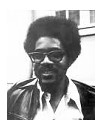
Thirty years after the murder of Guyana-born scholar and activist Walter Rodney, Wazir Mohamed considers the role of imperialism and the big powers in the silencing of ‘a defender of the people’s right to equality’.
June 13, 2010 will mark 30 years since Walter Rodney 'the prophet of self-emancipation' was murdered in Guyana at the hands of a brutal dictator acting in cahoots with the agents of international capital. In commemorating the life of Walter Rodney, it is our responsibility to contextualise his killing and to remind ourselves of the role of imperialism and the pivotal role of the big powers in his silencing.
|
|
Caribbean: Preparing Haiti for Exploitation and Plunder
|
|
By Stephen Lendman
May 01, 2010
Over 15 weeks post-quake, Haiti’s imperial takeover is proceeding. It began straightaway after the calamity, Haitians victimized by denied aid, appalling repression, and now dispossession of their land, homes, and communities. More on that below.
On April 16, the New York Times carried Reuters and AP reports stating Haiti’s parliament approved the participation of foreign investors to rebuild the country, meaning, of course, seize, occupy, own, control, and colonize it for profit, using Haitians as exploited serfs.
AP stated: ”Haiti’s soon-to-expire parliament has approved the creation of (an Interim Haiti Reconstruction Commission – IHRC) co-chaired by former US President Bill Clinton to oversee billions in post-quake reconstruction aid, the Ministry of Communications said Friday (April 16).”
The vote also extended Haiti’s state of emergency for 18 months, leaving the Rene Preval-Jean-Max Bellerive government in charge, effectively a dictatorship like Preval instituted in 1999 by not renewing parliament and ruling by decree pending new elections.
|
|
Caribbean: Recent Media Coverage of Cuba: Selective Commendation, Selective Indignation
|
|
By Emily Kirk, John Kirk and Norman Girvan
April 27, 2010
The January 2010 earthquake in Haiti caused some 230,000 deaths, left 1.5 million homeless, and has directly affected 3 million Haitians—1/3 of the population. On March 31, representatives of over 50 governments and international organizations gathered at the United Nations Haiti Donor Conference to pledge long-term assistance for the rebuilding of Haiti. At the conference, Cuba made arguably the most ambitious and impressive pledge of all countries—to rebuild the entire National Health Service. While the efforts of other government have been praised, those of Cuba, however, have largely been ignored in the media.
The aim of Cuba's contribution is to completely reconstruct the Haitian health care system—and to do so in a sustainable manner. The new system will be based on the Cuban model, embracing primary, secondary and tertiary health care, in addition to the training of additional Haitian doctors in Cuba.
|
|
Caribbean: Haiti Post-Quake: Devastation, Depravation, Exploitation, and Oppression
|
|
By Stephen Lendman
March 29, 2010
Two and half months post-quake, the major media mostly ignore Haiti, the calamitous conditions on the ground, and the growing desperation of millions forced to largely endure on their own - out of sight, mind, the concern of world leaders, and UN, USAID and other aid organizations diverting most of the $700 million + donated to contractors and profiteering NGOs.
A March 11 New York Times editorial titled, "Haiti, Two Months Later," tried to have it both ways, citing relief effort failures, yet praising the US, UN, foreign countries, and aid organizations for:
"dispatch(ing) tents, tarps, food, water, medicine and doctors as they should. They have done a lot of good, particularly the United States, which rushed supplies, a troop force....and a hospital ship. Many lives were saved."
Unmentioned was the thousands of US combat troops obstructing aid, getting none to the most impoverished neighborhoods, and amounts to emergency shelters have been woefully inadequate, making calamitous conditions worse.
|
|
Caribbean: American Genocides: Is Haiti Next?
|
|
By Stephen Lendman
February 22, 2010
Distinguished historian, scholar and activist Gabriel Kolko studied "the nature and purpose of (American) power (since) the 1870s," calling it "violen(t), racis(t), repressi(ve) at home and abroad (and) cultural(ly) mendaci(ous)." It's been the same since inception, historian Howard Zinn calling colonial America:
"a class society from the beginning. America started off as a society of rich and poor, people with enormous grants of land and people with no land. And there were riots, there were bread riots in Boston, and riots and rebellions all over the colonies, of poor against rich, of tenants breaking into jails to release people who were in prison for nonpayment of debt. There was class conflict. We try to" portray a benevolent nation. We weren't then. We're not now.
|
|
Caribbean: Freedom Rider: Useless Aid, No Donation Without Agitation
|
|
By Margaret Kimberley
January 27, 2010 - blackagendareport.com
“Dollars must come with demands of non-interference in Haiti’s affairs and demands of accountability to charitable organizations.”
A telethon hosted by celebrities succeeded in raising more than $57 million in funds for the relief of Haiti earthquake victims. Yet that sum and the many millions more donated by individuals around the world will do little to relieve Haiti’s plight.
Haitians are living in their latest hellish incarnation created by American meddling and the crushing of that nation’s democracy. As long as the United States directs Haiti’s affairs, and empowers a corrupt elite instead of the will of the masses, suffering will continue whether caused by natural or human-made disaster.
|
|
Caribbean: Haiti: An Unwelcome Katrina Redux
|
|
By Cynthia McKinney
January 22, 2010 - globalresearch.ca
President Obama's response to the tragedy in Haiti has been robust in military deployment and puny in what the Haitians need most: food; first responders and their specialized equipment; doctors and medical facilities and equipment; and engineers, heavy equipment, and heavy movers. Sadly, President Obama is dispatching Presidents Bush and Clinton, and thousands of Marines and U.S. soldiers. By contrast, Cuba has over 400 doctors on the ground and is sending in more; Cubans, Argentinians, Icelanders, Nicaraguans, Venezuelans, and many others are already on the ground working – saving lives and treating the injured. Senegal has offered land to Haitians willing to relocate to Africa.
The United States, on the day after the tragedy struck, confirmed that an entire Marine Expeditionary Force was being considered "to help restore order," when the "disorder" had been caused by an earthquake striking Haiti; not since 1751, 1770, 1842, 1860, and 1887 had Haiti experienced an earthquake. But, I remember the bogus reports of chaos and violence that led to the deployment of military assets, including Blackwater, in New Orleans in the aftermath of Hurricane Katrina. One Katrina survivor noted that the people needed food and shelter and the US government sent men with guns. Much to my disquiet, it seems, here we go again. From the very beginning, US assistance to Haiti has looked to me more like an invasion than a humanitarian relief operation.
|
|
Caribbean: Misinformation and Racism Hamper Recovery Efforts in Haiti
|
|
Doctor: Misinformation and Racism Have Frozen Recovery Effort at General Hospital in Port-au-Prince
By Democracy Now!
January 19, 2010
"There are no security issues," says Dr. Evan Lyon of Partners in Health, reporting from the General Hospital in Port-Au-Prince in Haiti, where 1,000 people are in need of operations. Lyon said the reports of violence in the city have been overblown by the media and have affected the delivery of aid and medical services.
***
JUAN GONZALEZ: Amy Goodman is in Haiti, and we'll be joining
her in a few minutes. But first, we turn to a voice from one hospital
in Port-au-Prince that was badly destroyed by last week's earthquake.
The General Hospital is three blocks from the crumbling National
Palace.
Former President Bill Clinton visited the hospital Monday, as
hundreds of people with broken limbs and multiple fractures were
waiting for medical supplies to arrive.
|
|
Caribbean: Profiting From Haiti's Crisis
|
|
By Benjamin Dangl
January 19, 2010 - towardfreedom.com
US corporations, private mercenaries, Washington and the International Monetary Fund are using the crisis in Haiti to make a profit, promote unpopular neoliberal policies, and extend military and economic control over the Haitian people.
In the aftermath of the earthquake, with much of the infrastructure and government services destroyed, Haitians have relied on each other for the relief efforts, working together to pull their neighbors, friends and loved ones from the rubble. One report from IPS News in Haiti explained, "In the day following the quake, there was no widespread violence. Guns, knives and theft weren't seen on the streets, lined only with family after family carrying their belongings. They voiced their anger and frustration with sad songs that echoed throughout the night, not their fists."
|
| |
|
There is a problem right now with this block.
|
|